Turning mountains of case data into clear next steps
Enterprise analytics software that helps agents and analysts work through large amounts of data during criminal investigations.
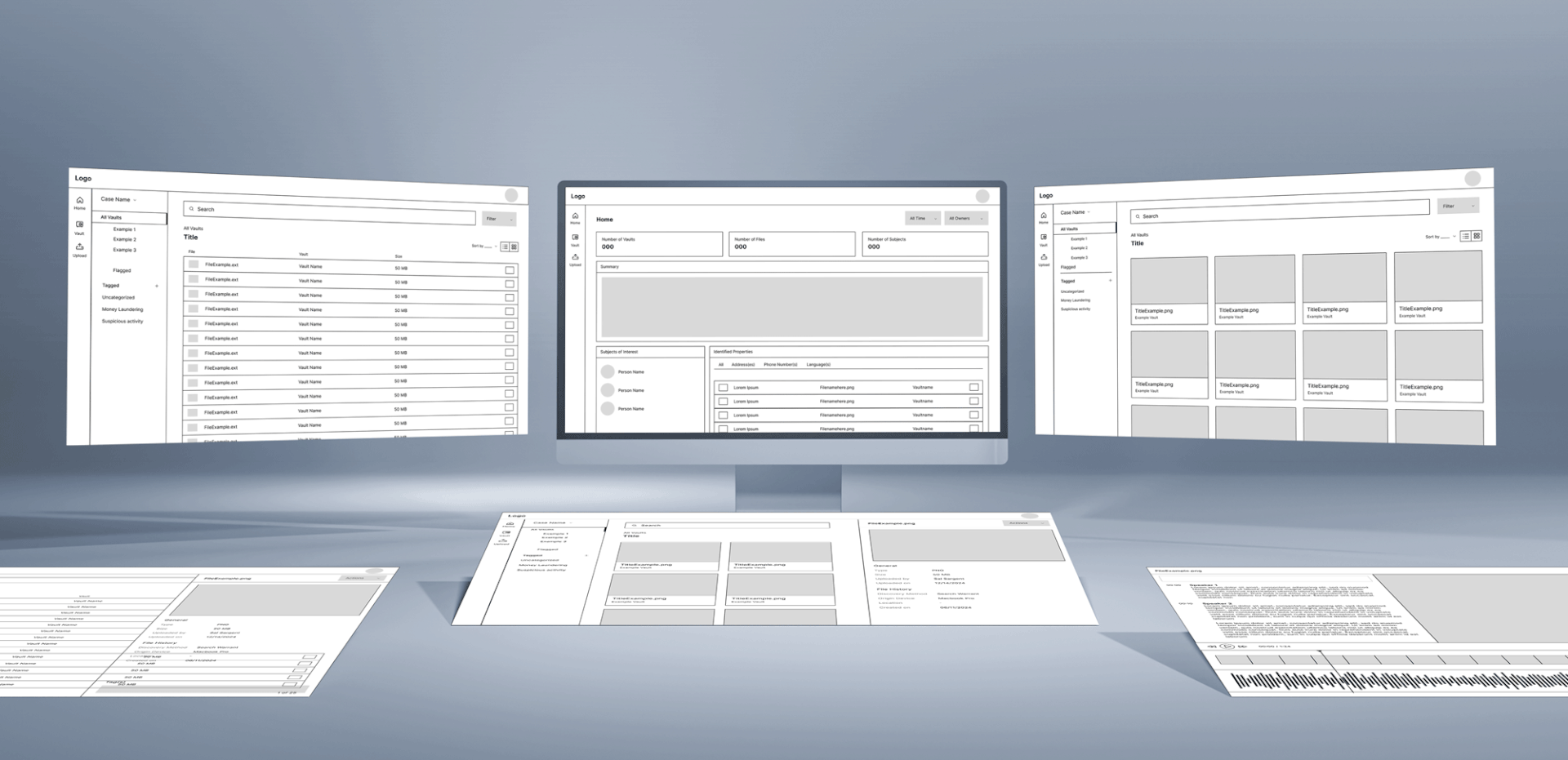
A note on confidentiality. The designs and information on this page have been generalized and altered to protect sensitive user data and project details. The core design principles and problem-solving approach remain true to the original project.
The short version
In 2019, an analytics platform launched as the central hub for building advanced analytics tools and modernizing the investigative processes.
The organization needed a custom enterprise-level platform that let agents and analysts quickly organize and analyze large amounts of disparate data, often for mission-critical, time-sensitive investigations.
I guided the project from concept through deployment and several years of iterations by leading stakeholder meetings, created wireframes and prototypes, running user testing sessions, and evolving the enterprise design system to establish UX best practices across multiple applications.
Three problems slowing investigators down
- Information overloadMassive datasets made it hard to see what mattered.
- Fragmented workflowsInvestigators had to move between several third-party tools, often with different data structures
- Slow manual workTime-intensive processes delayed cases from reaching prosecution.
How we worked
- Ethnographic interviews to learn current workflows, pain points, and gaps in existing third-party tools
- Pain point analysis with the team to shape feature recommendations
- Technical evaluation of recommendations against existing technology, to prioritize by impact and feasibility
- A phased roadmap (Phase 0 to 4) for the implementation timeline
- Mockups and prototypes for key features and workflows
- User testing with actual agents and analysts to validate design decisions
- Wireframes delivered to the development team with validated solutions
- Design system evolution: consistency first in Phase 0, then steady UX improvements over two years
What we shipped
Key features and tools:
- Robust search across government databases
- AI and machine learning to summarize, translate, and transcribe audio and video files
- File management with AI integrations to organize and analyze large amounts of data
- A view of connections between pieces of data
- Deduplication of complex data based on pattern analysis
Delivered:
- A robust design system
- 12 applications, including 1 mobile app